
Rigid Conduit Basics
Rigid metal conduit (RMC) is a threaded electrical conduit system that protects wiring and cable in applications requiring mechanical strength, durability, and long service life. Engineers commonly specify it in industrial applications where conduit faces impact, moisture, vibration, or other demanding conditions.
In comparison to lighter conduit types, such as intermediate metal conduit (IMC) and electrical metallic tubing (EMT), rigid conduit has a thicker wall. This additional thickness provides greater mechanical protection and impact resistance. It also improves corrosion resistance over time, making it a practical choice for exposed installations or areas where physical damage is a concern. Its threaded construction and inherent strength make rigid conduit a preferred choice for applications that demand long-term reliability.
Threaded Connections and Electrical Continuity
Installers assemble rigid conduit systems using threaded connections. These joints create secure mechanical connections and help maintain electrical continuity throughout the conduit run.
Electrical continuity plays an important role in grounding and bonding. When properly installed, threaded rigid systems help provide an effective path to ground for fault current and contribute to overall system integrity.
Threaded connections perform well in environments where vibration or physical stress may be present. NPT threaded connections can also help limit the ingress of splashing or spraying water when properly assembled, supporting use in demanding environments.
Installation Considerations
NFPA 70 (NEC®) permits the use of rigid metal conduit across a wide range of environments including exposed, concealed, wet, and underground installations. It also allows use in classified hazardous (HazLoc) locations when proper fittings are used.
As with any rigid conduit system, installation should follow NEC and local requirements. Field operations such as cutting, threading, and bending should follow established practices to maintain system integrity. Final installation is subject to approval by the Authority Having Jurisdiction (AHJ).
Stainless Steel Rigid Conduit for Corrosive Environments
Rigid conduit is available in several material types, including galvanized steel, PVC-coated steel, red brass, aluminum, and stainless steel. In practice, material selection depends on the environment and the conditions the system will face over its service life.
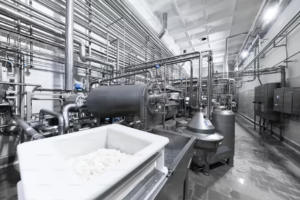
Stainless steel rigid conduit is commonly specified where corrosion resistance is critical. For example, in food and beverage facilities, wastewater treatment plants, coastal & marine environments, and other areas exposed to moisture, washdown, or chemicals, material selection directly impacts service life and maintenance requirements.
Within stainless steel conduit systems, grade selection is also important. Type 304 stainless steel performs well in many general industrial environments. However, Type 316 stainless steel, which includes molybdenum, provides enhanced corrosion resistance in chloride-rich or aggressive environments. Choosing the right grade helps ensure the conduit performs as expected under the conditions it will encounter.
Corrosion performance is often evaluated based on how a metal withstands exposure to various environments. To quantify this performance, corrosion is commonly measured in thousandths of an inch per year (often 0.001 to 0.005 inches per year, depending on the environment) of surface material loss. Therefore, in addition to composition, wall thickness can also influence how long a conduit system will perform in corrosive conditions.
Conclusion
Overall, rigid metal conduit remains a dependable solution for electrical conduit systems where strength, protection, and code compliance are essential. From underground runs to wet locations and classified spaces, rigid systems perform under demanding conditions.
Understanding how material type, grade selection, and installation practices work together allows engineers and contractors to select a rigid metal conduit system that delivers long-term performance and corrosion resistance throughout the life of the facility.